
CRM software for startups USA pricing comparison
In the fast-paced ecosystem of American startups, data is the only real currency. Whether you are a three-person team in a garage in Austin or a Series A powerhouse in Palo Alto, how you manage your customer relationships determines your ceiling.
By 2026, the CRM (Customer Relationship Management) landscape will have shifted. It is no longer just about storing contact names; it’s about AI-driven predictive sales, automated workflow orchestration, and seamless tech-stack integration.
But here is the million-dollar question: How do you choose a platform that scales with you without draining your runway? This guide provides a deep-dive CRM software for startups USA pricing comparison to help you make an informed, data-backed decision.
Why Your Startup Can’t Survive on Spreadsheets in 2026
Let’s be honest. In the early days, a Google Sheet feels “good enough.” It’s free, and everyone knows how to use it. But as soon as you hire your first sales rep or launch your first ad campaign, the “spreadsheet method” breaks.
- Lead Leakage: 40% of startup leads are lost due to poor follow-up. A CRM ensures no one falls through the cracks.
- The Single Source of Truth: When marketing, sales, and support all see the same data, the customer experience becomes seamless.
- Scalability: You don’t want to be migrating data when you’re trying to close your Series B. You need a foundation that grows.
The most successful US startups are moving toward “Lean CRM” models—platforms that offer high power with low administrative overhead.
Critical Features Every US Startup Needs
Before we talk dollars and cents, let’s define what you are actually paying for. A modern CRM for a US-based startup must include:
- US-Centric Integrations: Direct hooks into QuickBooks, Xero, Slack, LinkedIn Sales Navigator, and Zoom.
- AI Forecasting: Tools that tell you which deals are likely to close based on historical data.
- Mobile-First Design: For founders and reps who are constantly on the move.
- Compliance: Built-in SOC2, GDPR, and CCPA readiness to protect your liability.
2026 Pricing Comparison: Top CRM Software for Startups
Here is a breakdown of the heavy hitters currently dominating the US startup scene.
| CRM Provider | Entry Level Price (Monthly) | Best For… | Key Startup Feature |
| HubSpot | $0 – $15 (Starter) | All-in-one growth | Free-to-paid scalability |
| Salesforce Starter | $25 per user | Tech-heavy startups | Advanced reporting |
| Zoho CRM | $14 per user | Budget-conscious teams | AI Assistant (Zia) |
| Pipedrive | $14 per user | Sales-focused teams | Visual pipeline management |
| Monday.com | $12 per user | Operations & Sales | Extreme customization |
The Big Comparison: Top 7 CRMs for Startups in 2026
Here is the breakdown of the heavy hitters currently dominating the US market.
A. HubSpot: The “All-in-One” Ecosystem
HubSpot remains the gold standard for startups that want marketing, sales, and service in one place. Their “HubSpot for Startups” program is legendary, offering up to 90% off for eligible companies.
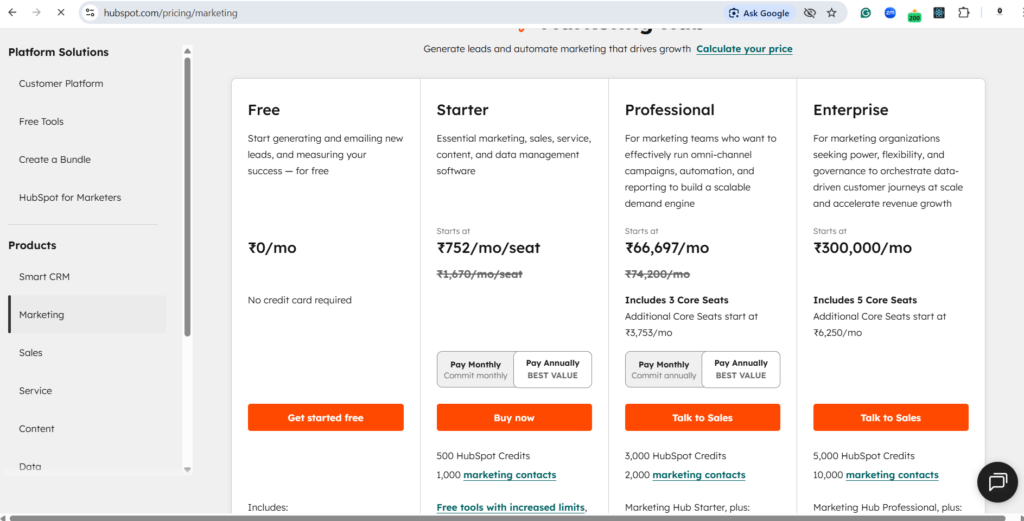
- Pricing (Startup Tier): Starts at roughly $15/month for the Starter Suite. Professional tiers jump to $450+/month (before startup discounts).
- Best For: Content-led startups and those who want a “set it and forget it” ecosystem.
- Pros: Incredible UI, world-class academy, and the best free tier in the industry.
- Cons: Once the startup discount expires after year two, the price jump can be a “sticker shock.”
B. Salesforce Starter & Pro Suite: The Industry Giant
Salesforce has spent the last two years simplifying its entry-level products to compete with HubSpot. The “Starter Suite” is specifically designed to get startups up and running in minutes.
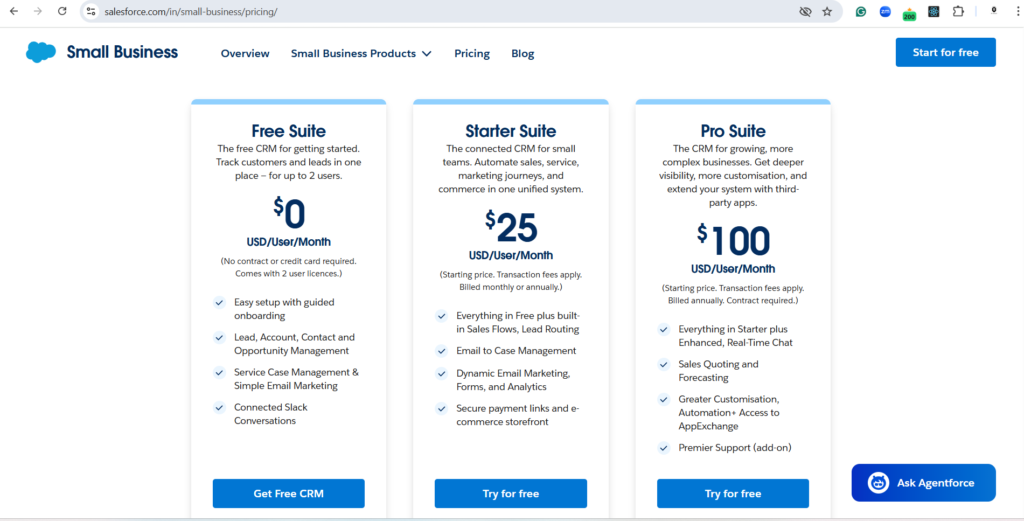
- Pricing: $25 per user/month (billed annually).
- Best For: Startups planning to go public or scale into massive enterprises.
- Pros: Unlimited customization and the largest integration marketplace (AppExchange) in the world.
- Cons: Can be “overkill” for very small teams; requires more setup time than others.
C. Zoho CRM: The Value Champion
For the bootstrapped founder, Zoho offers the most features per dollar spent. It is a robust, highly customizable platform that rivals Salesforce at a fraction of the cost.
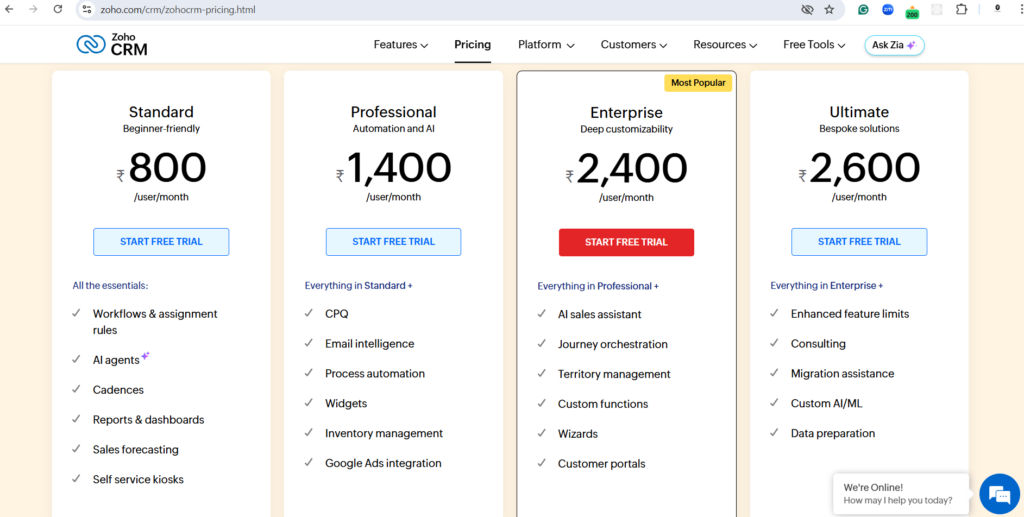
- Pricing: Standard at $14/user, Professional at $23/user, and Enterprise at $40/user.
- Best For: Startups that need advanced features (like AI assistants and inventory management) on a budget.
- Pros: Zia (AI assistant) is genuinely helpful for lead scoring.
- Cons: The UI can feel a bit cluttered compared to modern “minimalist” CRMs.
D. Pipedrive: The Salesperson’s Choice
Pipedrive was built by salespeople, for salespeople. It ignores the “fluff” and focuses entirely on the visual sales pipeline.
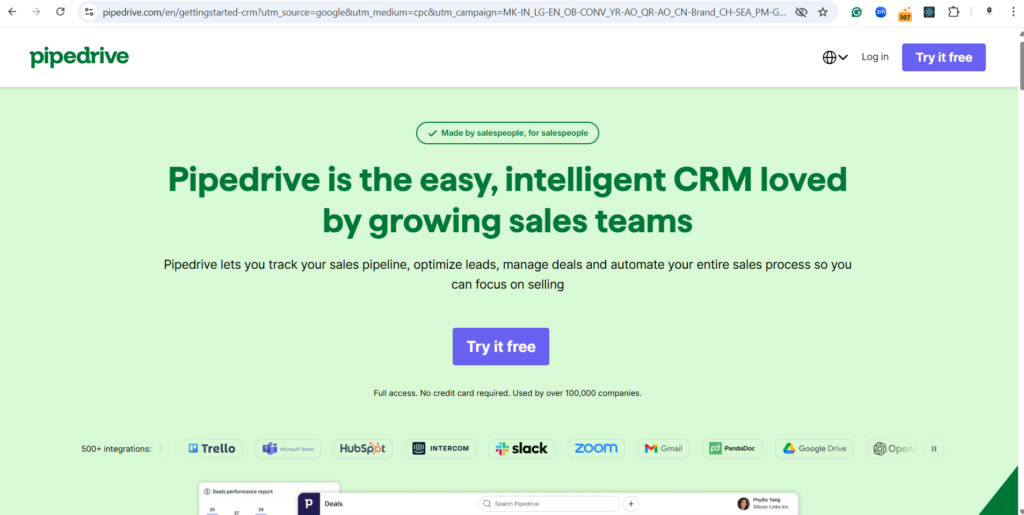
- Pricing: Essential at $14/user, Advanced at $27/user, and Professional at $49/user.
- Best For: High-velocity outbound sales teams.
- Pros: Extremely intuitive; the “drag-and-drop” interface makes managing 100+ deals easy.
- Cons: Limited marketing automation features compared to HubSpot.
E. Monday.com CRM: The Modern Work OS
Monday.com has evolved from a project management tool into a very capable CRM. It is perhaps the most “visual” and customizable tool on this list.
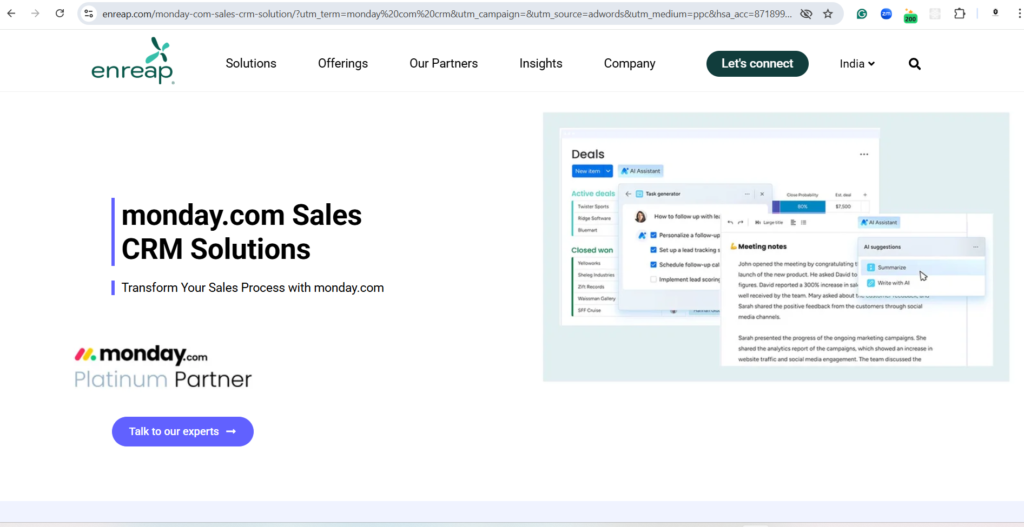
- Pricing: Basic at $12/user, Standard at $17/user, and Pro at $28/user.
- Best For: Startups that want to manage projects and sales in the same app.
- Pros: Beautiful design and incredibly easy to build custom workflows.
- Cons: The “CRM” specific features are still catching up to veterans like Salesforce.
Comparative Pricing Table (Estimated 2026 Rates)
| CRM Tool | Starting Price (Monthly) | Top Feature for Startups | Scalability Rating |
| HubSpot | $15 (Starter) | Integrated Marketing Tools | 10/10 |
| Salesforce | $25 (Starter) | Enterprise-Grade Reporting | 10/10 |
| Zoho CRM | $14 (Standard) | AI Lead Scoring (Zia) | 9/10 |
| Pipedrive | $14 (Essential) | Visual Pipeline Management | 7/10 |
| Monday CRM | $12 (Basic) | Total Workflow Customization | 8/10 |
| Freshsales | $9 (Growth) | Built-in Phone & Email | 7/10 |
| Copper | $23 (Basic) | Native Google Workspace Sync | 6/10 |
5. How to Choose: The Startup Decision Framework
Don’t just pick the cheapest one. Use this framework to decide:
- The “Integrations” Test: Does it talk to the tools you already use (Slack, Gmail, Stripe)?
- The “Adoption” Test: Will your sales reps actually use it? If the UI is too complex, they will go back to using their “Notes” app.
- The “Data” Test: Does it provide the reports your investors want to see (CAC, LTV, Churn, Pipeline Velocity)?
- The “Hidden Costs” Test: Factor in the cost of implementation, data migration, and third-party consultants.
6. 2026 Trends: The Rise of AI Agents in CRM
The biggest change in 2026 is the Autonomous CRM. Modern tools now offer “AI Agents” that don’t just record data—they act on it. They can automatically research a prospect’s recent LinkedIn post, draft a personalized email, and suggest the best time to send it. When comparing pricing, look at whether these AI features are included or sold as “add-ons.”
7. Final Verdict: Which One Wins?
- For the “Growth-at-all-costs” Startup: HubSpot is the winner due to its integrated marketing suite and startup discount program.
- For the “Tech-Heavy” Startup: Salesforce is the choice if you need deep data science and custom coding capabilities.
- For the “Lean & Bootstrapped” Startup: Zoho CRM provides the best feature-to-price ratio in the US market today.
Also Learn: I Tested 50+ Cybersecurity Tools for 2026; These 10 Actually Block AI Phishing