
As technology continues to advance at an incredible pace in the current world, SaaS Security Posture Management Tools have become necessary tools for any firm that needs to protect its cloud-based software. The widespread use of Software as a Service (SaaS) solutions makes security management more important than ever. In this article, we examine the leading SaaS Security Posture Management Tools of 2026.
What Are SaaS Security Posture Management Tools?
SaaS Security Posture Management Tools are specialized cybersecurity solutions designed to provide continuous visibility and automated security for SaaS environments. Unlike CSPM (which secures infrastructure like AWS) or CASB (which acts as a gateway), SSPM goes deep into the application layer to fix misconfigurations, manage user permissions, and ensure compliance.
Why Are SaaS Security Posture Management Tools Important?
Enhanced Security: Detect and remediate security misconfigurations before they lead to breaches.
Regulatory Compliance: Ensure adherence to standards like GDPR, HIPAA, and SOC 2.
Risk Reduction: Reduce the attack surface by maintaining a secure SaaS environment.
Operational Efficiency: Automate security assessments and streamline compliance reporting.
Why SSPM is Critical in 2026
Preventing “Shadow SaaS”: Over 55% of employees now sign up for SaaS apps without IT’s knowledge.
Fixing Misconfigurations: A single “public” checkbox in a file-sharing app can lead to a multi-million dollar data breach.
Controlling Third-Party Risk: Modern SaaS apps are interconnected via APIs. SSPM monitors these “non-human” identities to prevent lateral movement by attackers.
Future of SaaS Security
The demand for SSPM tools is expected to grow significantly over the next few years. With the rise of remote work and cloud adoption, organizations are investing more in SaaS security than ever before.
Artificial intelligence and automation will play a major role in the evolution of these tools, enabling faster threat detection and smarter security management.
Best SaaS Security Posture Management Tools of 2026
To help you choose the right solution, we have categorized the leading SaaS Security Posture Management Tools based on their unique strengths.
1. AppOmni: The Enterprise Standard
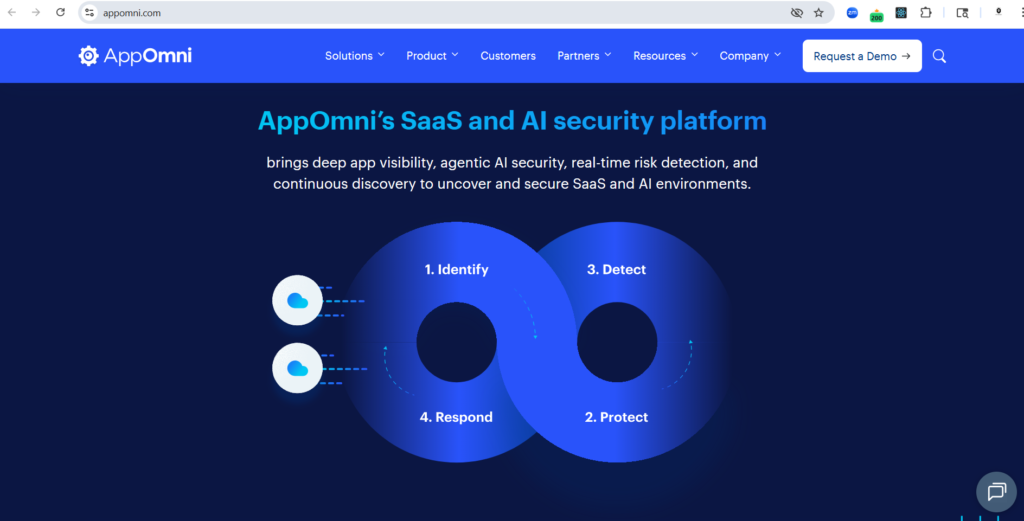
AppOmni remains a leader for large-scale enterprises. It provides deep visibility into the most complex SaaS platforms and offers “guardrails” that prevent configuration drift in real-time.
Best for: Fortune 500 companies with massive SaaS footprints.
Key Feature: Automated remediation that fixes security gaps without human intervention.
2. Obsidian Security: The Identity Specialist
Obsidian focuses on the intersection of SaaS and identity. It uses machine learning to detect compromised accounts and insider threats by analyzing user behavior across different apps.
Best for: High-security sectors like Finance and Healthcare.
Key Feature: Advanced User and Entity Behavior Analytics (UEBA).
3. Adaptive Shield: The Configuration Powerhouse
If your primary concern is the sheer volume of settings across hundreds of apps, Adaptive Shield is the go-to. It offers a “single pane of glass” to manage security settings for over 150+ SaaS applications.
- Best for: Rapidly growing mid-market to enterprise companies.
- Key Feature: Granular risk scoring for every app in your stack.
4. Wiz CNAPP: The Unified Giant
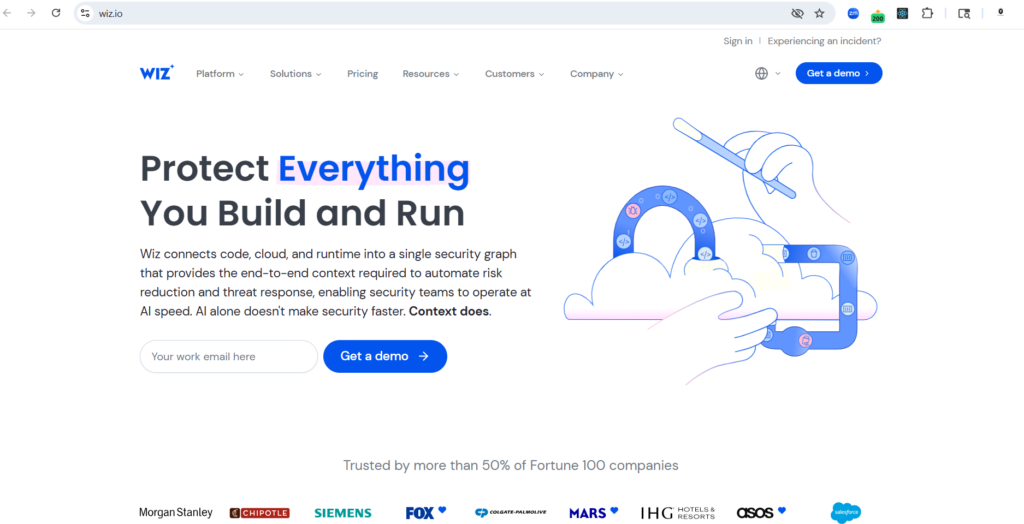
Wiz has expanded its Cloud-Native Application Protection Platform (CNAPP) to include robust SSPM capabilities. It allows you to manage SaaS security alongside your AWS, Azure, and Google Cloud environments.
Best for: Teams looking to consolidate their security stack.
Key Feature: Context-aware risk prioritization.
| Tool | Focus Area | Deployment | Best For |
| AppOmni | Configuration & Drift | API-based | Enterprise Scalability |
| Obsidian | Identity & Threat Detection | API-based | Behavioral Analytics |
| Adaptive Shield | Broad App Support | API-based | Diverse SaaS Portfolios |
| Varonis | Data-Centric Security | Agentless | Data Privacy & DLP |
| Wiz | Unified Cloud Security | Agentless | Full Stack Visibility |
Core Features to Look for in 2026
When evaluating SaaS Security Posture Management Tools, ensure they include these five pillars of modern SaaS security:
- Continuous Monitoring: Security isn’t a one-time audit. Your tool must scan for changes 24/7.
- Compliance Mapping: Automatically map your SaaS settings to frameworks like GDPR, HIPAA, and SOC2.
- SaaS-to-SaaS Visibility: The ability to see which third-party plugins have “Read/Write” access to your core data.
- Identity Governance: Identifying “zombie” accounts (inactive users) and over-privileged admins.
- Guided Remediation: When a flaw is found, the tool should provide a step-by-step fix or an automated “undo” button.
How to Choose?
Selecting the right SaaS Security Posture Management Tools depends on your organization’s maturity. If you are a Microsoft-centric shop, Microsoft Defender for Cloud Apps might be a natural start. However, for a truly vendor-neutral, deep-dive security posture, specialized tools like AppOmni or Adaptive Shield are the industry benchmarks for 2026.
Pro-Tip: Begin with a “SaaS Risk Assessment.” The leading SSPM providers all have a free scan that tells you precisely how many misconfigurations exist within your infrastructure. You’ll probably be shocked by the results.