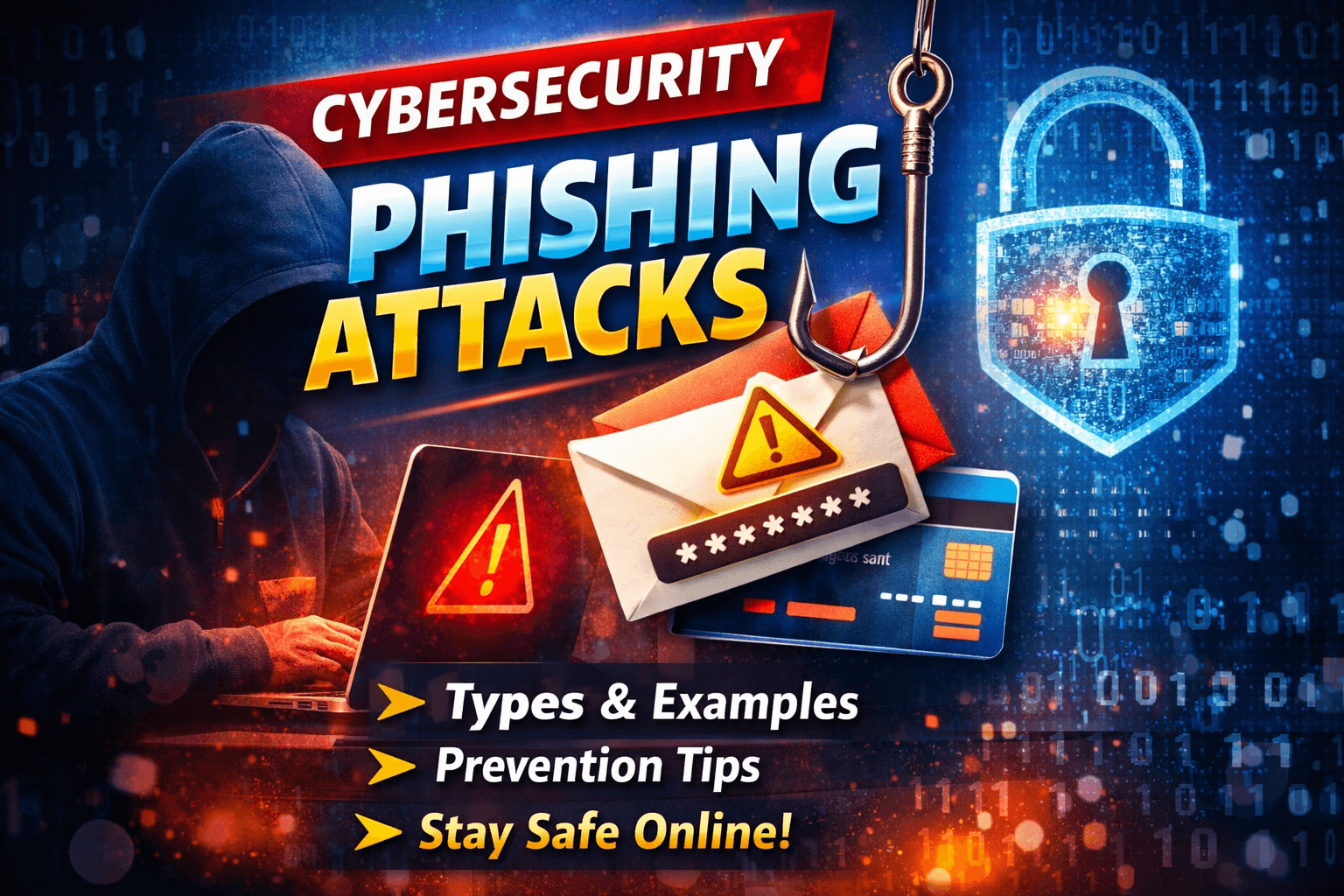
Cybersecurity Phishing Attacks: Types, Examples & Prevention Guide for Students and Professionals
In today’s digital world, cybersecurity is no longer optional—it is a necessity. One of the most common and dangerous threats in cybersecurity is phishing attacks. Whether you are a student learning cybersecurity basics or a professional working in IT, finance, healthcare, or any digital field, understanding phishing attacks is critical to protecting data, systems, and people.
This blog explains what cybersecurity phishing attacks are, how they work, provides real-world examples, discusses prevention techniques, and career relevance in simple and practical language.
What Are Cybersecurity Phishing Attacks?
A phishing attack is a type of cyberattack where attackers trick people into sharing sensitive information such as:
- Login credentials
- Bank or credit card details
- Personal identity information
- Company data
Attackers usually pretend to be a trusted organization or person like a bank, government agency, company HR, or even a friend.
Phishing is one of the biggest threats in cybersecurity because it targets human behavior, not just technical systems.
Why Phishing Attacks Are So Dangerous
Phishing attacks are successful because:
- They look real and convincing
- They create fear or urgency
- They exploit human trust
- They bypass advanced security tools by targeting people directly
According to cybersecurity reports, phishing is responsible for:
- Most data breaches
- Ransomware infections
- Business Email Compromise (BEC) attacks
Common Types of Phishing Attacks
Understanding different phishing techniques is essential for both students and professionals.
1. Email Phishing
The most common type. Attackers send fake emails pretending to be from:
- Banks
- PayPal
- Amazon
- Office 365
- Universities or employers
These emails often contain:
- Fake login links
- Malicious attachments
- Urgent warnings
2. Spear Phishing
A targeted attack aimed at a specific person or organization.
Example:
An email sent to an employee that appears to be from their manager asking for confidential data.
3. Whaling Attacks
A type of spear phishing targeting senior executives like CEOs or CFOs.
The goal is usually:
- Large financial transfers
- Access to critical systems
4. Smishing (SMS Phishing)
Phishing via text messages.
Example:
“Your bank account is blocked. Click here to verify.”
5. Vishing (Voice Phishing)
Phishing using phone calls, often pretending to be:
- Bank officials
- Tech support
- Government authorities
How Phishing Attacks Work (Step-by-Step)
- Preparation
Attackers create fake websites, emails, or messages. - Delivery
The phishing message is sent via email, SMS, or social media. - Deception
The victim clicks a link or opens an attachment. - Data Theft or Malware Infection
Credentials are stolen or malware is installed. - Exploitation
Stolen data is used for fraud, identity theft, or further attacks.
Real-Life Examples of Phishing Attacks
- Fake Google security alerts asking users to reset passwords
- COVID-19 related phishing emails during the pandemic
- Fake job offers targeting students
- Fake invoice emails targeting businesses
How to Identify a Phishing Attack
Students and professionals should watch out for:
- Urgent or threatening language
- Unknown or suspicious sender email addresses
- Spelling or grammar mistakes
- Generic greetings like “Dear User.”
- Links that don’t match the official website
- Unexpected attachments
How to Prevent Phishing Attacks
For Individuals (Students & Professionals)
- Never click suspicious links
- Check the sender’s email carefully
- Enable two-factor authentication (2FA)
- Keep software and systems updated
- Use strong, unique passwords
- Don’t share sensitive information via email or SMS
For Organizations
- Conduct regular cybersecurity awareness training
- Use email filtering and security tools
- Implement Zero Trust security models
- Monitor unusual login activities
- Create incident response plans
Role of Cybersecurity Professionals in Phishing Prevention
Phishing attacks create high demand for cybersecurity professionals such as:
- Security Analysts
- SOC Analysts
- Threat Intelligence Analysts
- Incident Response Specialists
- Ethical Hackers
Their responsibilities include:
- Detecting phishing campaigns
- Analyzing malicious emails
- Training employees
- Strengthening security infrastructure
Why Students Should Learn About Phishing Attacks
For students entering cybersecurity or IT fields:
- Phishing is a core exam topic
- Practical knowledge helps in certifications (CEH, Security+, CISSP)
- Real-world skills improve job readiness
- Understanding phishing helps protect personal data
Learning phishing detection early gives a strong foundation in cybersecurity.
Future of Phishing Attacks
With AI and automation, phishing attacks are becoming:
- More realistic
- Harder to detect
- Highly personalized
Cybersecurity professionals must adapt using:
- AI-based detection
- Behavioral analysis
- Continuous user education
Final Thoughts
Cybersecurity phishing attacks are one of the biggest threats in the digital era. They affect students, professionals, businesses, and governments alike. The good news is that knowledge and awareness are the strongest defenses.
By understanding how phishing attacks work and learning how to prevent them, students can build strong cybersecurity foundations, and professionals can protect organizations from serious cyber risks.