ITDR Security Tools for Enterprises
Enterprise cybersecurity is no longer just about firewalls and endpoint protection. Today, identity is the new attack surface. Hackers are targeting credentials, permissions, and access pathways — not just systems.
Why ITDR Has Become the Most Critical Layer in Enterprise Security
Over the recent years, enterprise security has seen a huge transformation. No longer are bad actors attempting to breach firewalls; they are accessing using valid credentials.
As a result, the modern attack surface that has become the biggest risk and main target is identity.
Starting off from compromised credentials as part of a phishing campaign, ending with privilege escalation attacks, today most security breaches involve the abuse of identity. While current technologies such as SIEM and EPP help detect abnormal activities, they still fall short of comprehending what is happening in terms of user behavior.
This is exactly where ITDR security tools for enterprises are transforming security operations.
ITDR, or Identity Threat Detection and Response, is a technology that is responsible for constantly monitoring users’ activities, identifying abnormal behaviors, and responding to potential attacks immediately when an identity has been compromised. While regular technologies try to react to the situation after something harmful already happened, the solution operates in a proactive manner.
The matter becomes even more relevant to enterprises operating in the US market, which are required to meet compliance frameworks such as SOC 2, HIPAA, or PCI DSS.
What Makes ITDR Different From Traditional Security Tools
To understand the value of ITDR, you need to look at the gap it fills.
Most enterprise environments already have:
- Endpoint Detection and Response (EDR)
- Security Information and Event Management (SIEM)
- Identity and Access Management (IAM)
But, there are instances where breaches do take place.
The problem lies in the fact that these systems were never designed with capabilities for analyzing the behavior of identities in hybrid networks.
ITDR systems operate on a much higher level by gathering information from various sources like AD, cloud identity providers, SaaS applications, and authentication logs to form a behavioral picture of all identities and service accounts.
Whenever there’s any kind of anomaly, including logins from unknown locations, privilege escalation at weird times, or lateral movement within systems, the ITDR system detects it and takes action instantly.
And that’s precisely why ITDR technology is considered among the most valuable cybersecurity tools.
Top ITDR Security Tools for Enterprises in 2026
When evaluating ITDR platforms, enterprises are not just buying software; they are investing in risk reduction, compliance readiness, and operational efficiency.
Below are some of the most trusted and widely adopted ITDR solutions currently dominating enterprise security.
Microsoft Defender for Identity
ITDR solution offered by Microsoft works effectively in enterprise-level environments that make use of Active Directory and Azure AD, enabling users to gain insights into the identity signals generated in hybrid environments, thereby proving extremely beneficial to those who already use products from Microsoft.
One of the most powerful benefits that come with it includes the seamless compatibility of the system with current business processes, without the need for security teams to create any new ones.
This software analyses authentication traffic, identifies malicious actions like pass-the-hash, and tracks the lateral movement of attackers throughout the environment.
CrowdStrike Falcon Identity Protection
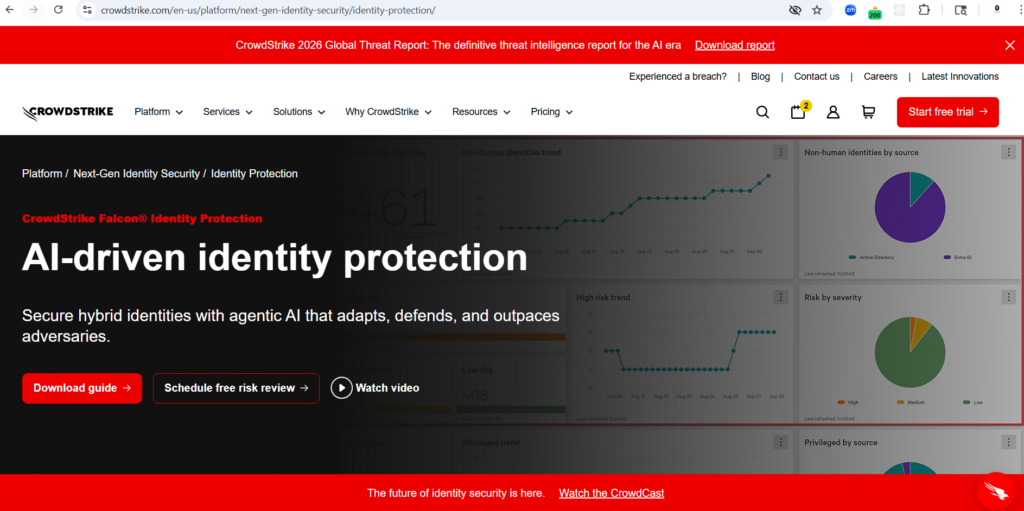
CrowdStrike has positioned itself as a leader by combining endpoint and identity security into a unified platform.
What makes Falcon Identity Protection stand out is its real-time detection capability. Instead of relying solely on logs, it actively monitors authentication attempts and stops threats before lateral movement occurs.
For enterprises adopting Zero Trust architecture, this tool provides a strong foundation because it connects identity verification with endpoint telemetry.
Okta Identity Threat Protection
Okta’s strength lies in its identity-first architecture. As one of the most widely used identity providers, it offers built-in ITDR capabilities that extend beyond access management.
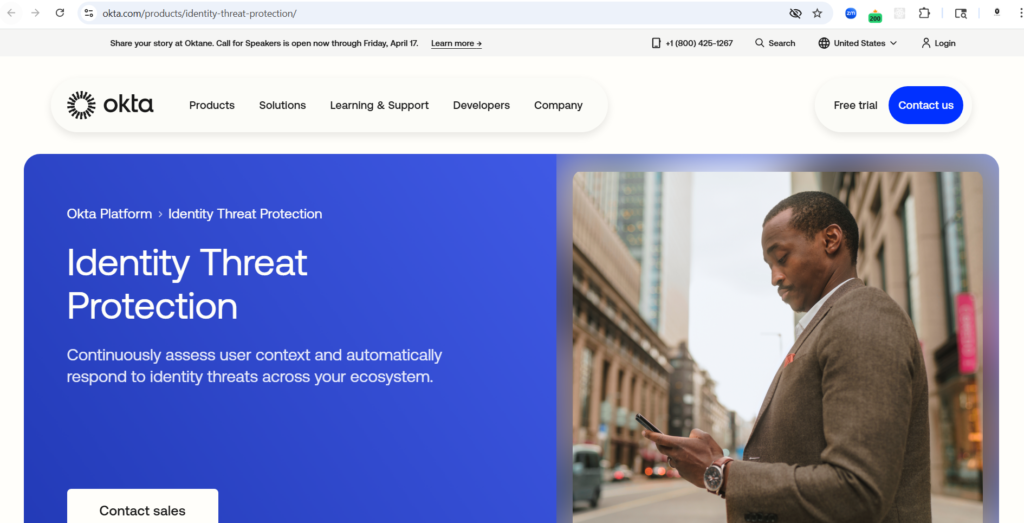
The platform uses risk-based authentication to dynamically adjust access controls based on user behavior. If something looks suspicious, it can enforce additional verification or block access entirely.
For SaaS-driven organizations, especially those operating fully in the cloud, Okta provides both convenience and strong security in a single layer.
SentinelOne Singularity Identity
SentinelOne brings AI-driven automation into identity protection. Its Singularity platform correlates identity data with endpoint signals to detect advanced attack patterns that would otherwise go unnoticed.
This is particularly useful in complex enterprise environments where attackers try to blend into normal user activity.
The automation layer reduces response time significantly, which is critical in preventing data exfiltration and minimizing breach impact.
Silverfort ITDR Platform
Silverfort stands out because of its agentless approach. Unlike traditional tools that require deployment across endpoints, Silverfort integrates directly into authentication flows.
This makes it highly effective for protecting legacy systems that typically lack modern security controls.
Enterprises with complex infrastructures often choose Silverfort because it provides visibility and protection without requiring major architectural changes.
CyberArk Identity Security Platform
CyberArk has long been a leader in privileged access management, and its ITDR capabilities build on that strength.
The platform focuses heavily on protecting high-risk accounts, which are often the primary targets in enterprise attacks.
By combining credential protection, behavioural analytics, and threat detection, CyberArk provides a comprehensive identity security solution for large organizations.
Conclusion
Enterprise security solutions in the ITDR category are transforming the approach to cyber security.
No longer limited to defending systems, enterprises are now protecting identities since this is precisely what the attackers are after.
Selecting an ITDR solution is much more than protecting yourself from threats. It involves creating an adaptable framework to keep up with the evolving threats.
The importance of ranking, monetizing, and getting quality visitors cannot be overstated.
FAQs
What does ITDR stand for?
Identity Threat Detection and Response, focused on identifying and stopping identity-based attacks.
Who should use ITDR tools?
Enterprises with hybrid, cloud, or SaaS environments handling sensitive data.
Are ITDR tools part of Zero Trust?
Yes, they are a critical component of Zero Trust security models.
Which ITDR tool is best in 2026?
CrowdStrike, Microsoft Defender, and CyberArk are among the top enterprise choices.