

Best Remote Browser Isolation Tools
The “open web” in 2026 is far more similar to a digital minefield than an asset. No matter how good one’s antivirus or firewall program is, the stark truth remains that over 80% of the attacks occur at the level of the browser. The days of receiving harmful emails are long gone because hackers have moved to AI-powered phishing attacks and zero-day exploits, which work the moment one loads a webpage.
As opposed to attempting to detect whether or not a website is safe—an approach that is getting increasingly difficult—it’s assumed that all websites are unsafe. The risks are no longer housed on one’s own computer but are placed on the internet in a safe and disposable container.
What Are Remote Browser Isolation Tools?
Remote Browser Isolation (RBI) is a cybersecurity technology that executes web browsing sessions in a remote cloud environment instead of on your local device.
Instead of loading websites directly on your system:
- The website runs on a remote server
- Only a safe visual stream is sent to your device
- No malicious code ever reaches your endpoint
This creates a complete isolation layer between users and the internet.
simple words:
You browse the internet, but the internet never touches your device.
How Remote Browser Isolation Works
Here’s a simplified step-by-step breakdown:
- User requests a website
- The request is sent to a remote cloud server
- The browser session runs in isolation
- A safe visual stream (pixels/DOM) is sent to the user
- No scripts or files execute locally
This ensures that:
- Malware stays in the cloud
- Your device remains clean
- Sensitive data is protected
Because all activity happens remotely, threats like ransomware, phishing, and zero-day exploits are neutralized before reaching the user.
Top 5 Remote Browser Isolation (RBI) Tools in 2026
Here are some of the most popular and enterprise-grade remote browser isolation tools:
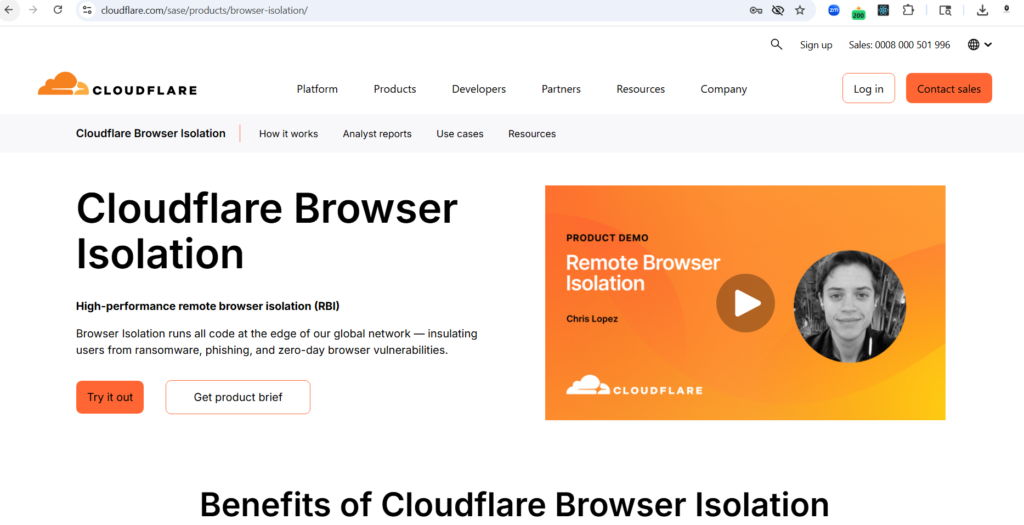
1. Cloudflare Remote Browser Isolation
- Fully cloud-based RBI
- Integrated with Zero Trust platform
- Fast and scalable
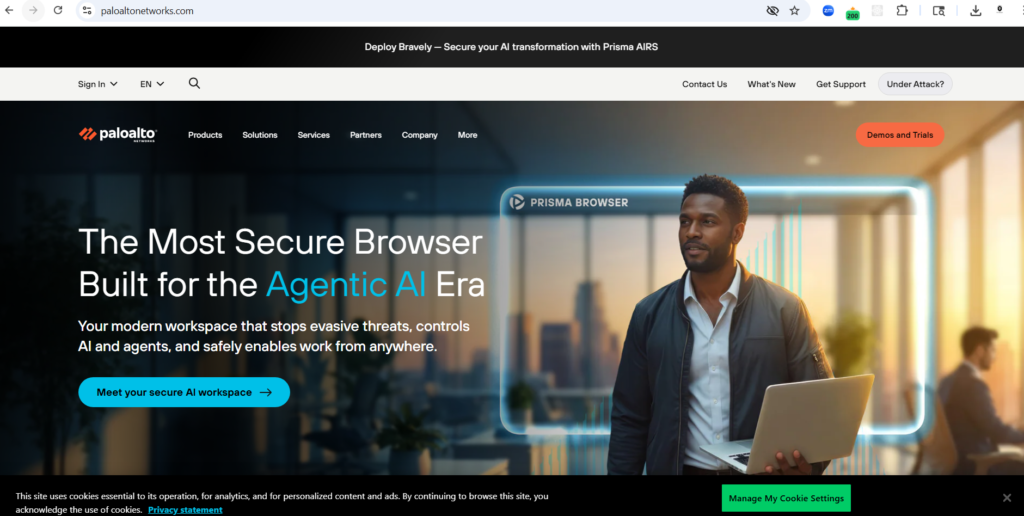
2. Palo Alto Networks RBI
- Advanced threat prevention
- Near-native browsing experience
- Works with SASE architecture
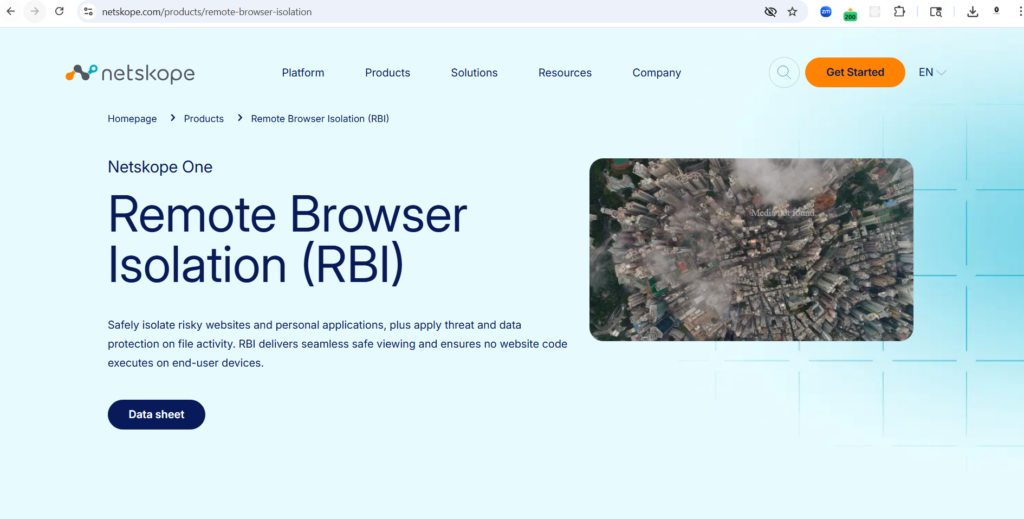
3. Netskope RBI
- Strong data protection features
- Integrated CASB + SWG
- Ideal for enterprises
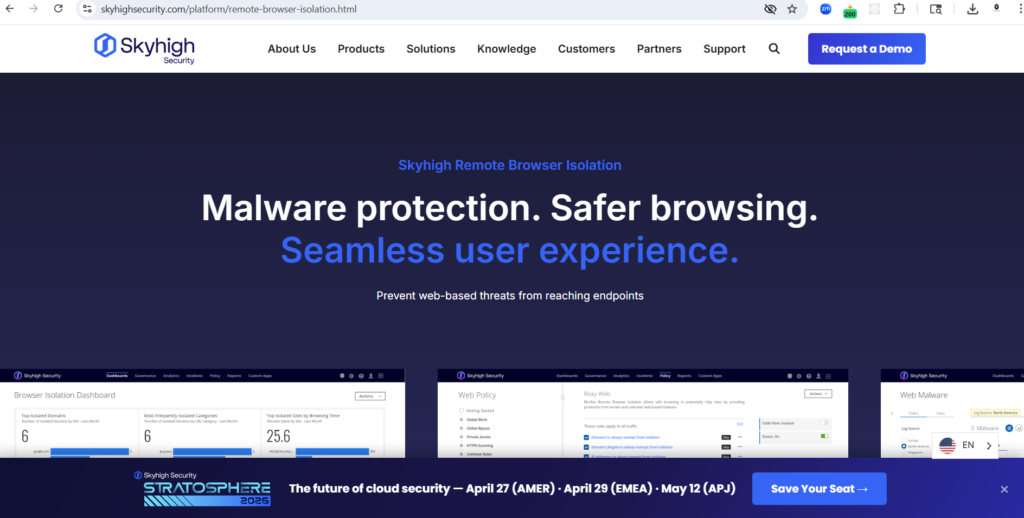
4. Skyhigh Security RBI
- AI-powered threat detection
- Real-time isolation
- Advanced download control
5. Cato Networks RBI
- Built into the SASE platform
- Simple deployment
- Cloud-native security
Why Remote Browser Isolation Tools Are Important in 2026
Cyber threats are evolving rapidly. Traditional security tools like antivirus software or firewalls detect threats after they appear.
RBI tools follow a “zero trust” approach:
- Assume every website is dangerous
- Isolate everything by default
This makes RBI one of the most effective preventive security technologies today.
Key Reasons RBI Is Growing Fast:
- Rise of SaaS and remote work
- Increase in phishing attacks
- Zero-day vulnerabilities in browsers
- Need for Zero Trust Architecture
Key Features of Remote Browser Isolation Tools
When choosing RBI tools, look for these features:
1. Full Session Isolation
Ensures complete separation between user and web content.
2. Zero-Day Protection
Protects against unknown threats instantly.
3. Data Loss Prevention (DLP)
Prevents sensitive data leaks.
4. File Sanitization
Downloads are cleaned before reaching users.
5. Policy Control
Admins can control:
- Copy/paste
- File uploads
- Screen capture
Benefits of Remote Browser Isolation Tools
1. Complete Malware Protection
Since no code runs locally, malware cannot infect your system.
2. Protection Against Zero-Day Attacks
Even unknown threats are blocked because they never reach your device.
3. Strong Phishing Defense
Users can visit malicious sites safely without risking credentials.
4. Data Security
Sensitive data stays protected within isolated environments.
5. Safe Remote Work
Perfect for:
- Work-from-home employees
- BYOD environments
Why You Can’t Ignore RBI in 2026
If you are still relying on traditional Secure Web Gateways (SWG), you are essentially playing a game of “Whack-a-Mole.” Here is why RBI tools are now a requirement:
1. Phishing has evolved
With AI-generated phishing, fake websites look 100% identical to the real ones. RBI allows you to open suspicious links in a “read-only” mode where the user cannot type their password, effectively killing the phishing attempt.
2. Zero-Day Protection
Standard security tools check a list of “known bad” sites. But what about a site that was created five minutes ago? RBI doesn’t care if the site is new; it isolates it regardless.
3. Protection for Remote & BYOD Workers
When employees work from home on personal laptops, you can’t control their local security. RBI ensures that even if their personal computer is a mess, your company data remains in a clean, isolated cloud environment.
Remote Browser Isolation Comparison Table
| Tool | Primary Tech | Best Use Case | UX Quality |
| Zscaler | Pixel Streaming | Large Enterprises | Excellent |
| Cloudflare | Vector Rendering | Speed & Performance | Industry-Leading |
| Menlo Security | DOM Reconstruction | Maximum Security | Very Good |
| Palo Alto | Hybrid Isolation | SASE Users | Good |
| Cato Networks | Cloud Native RBI | Simple Deployment | Good |
Conclusion
Remote Browser Isolation tools are no longer a luxury for the 1%. In 2026, they are the most effective way to close the “browser gap” in your security posture. Whether you choose the speed of Cloudflare, the scale of Zscaler, or the specialized protection of Menlo, moving your browsing to the cloud is the smartest move you can make this year.
FAQs
What are remote browser isolation tools?
They are security tools that run web browsing sessions in a remote environment to prevent threats from reaching your device.
Are RBI tools better than antivirus software?
Yes, RBI prevents threats entirely, while antivirus software detects them after exposure.
Do RBI tools slow down browsing?
Slightly, due to cloud processing, but modern tools minimize latency.
Who should use RBI tools?
Businesses, remote workers, and anyone needing high-level web security.